FLOATING THE IDEA: A Cejar Lagoon visitor who made me smile
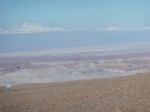
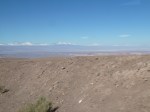
As I sat on the edge of the lagoon away from the tour buses and hordes of people that had just arrived, with the vast Atacama Desert before me, the base of the snow-covered Andes Mountain range a sandy road away, the dominant Licancabur Volcano casting its massive shadow, and Bolivia just on the other side, the question came to me: Can I ever return to an office job after this? I don’t think I can was my answer. And it’s not a matter of not wanting to, but simply not being able to. My brain won’t let me. It worked for me before, but now I would likely go utterly mad in such confinement.
I’ve worked in an office all my life, living in that box someone thought it would be best to call it anything but a box. How about a cubicle? That has a nicer ring, doesn’t it? A box connotes restriction – quashed creativity. A cubicle is limitless. For me it was fine. We do what we have to do to survive. Sometimes what society dictates. But that was then…this is…now here I am soaking my restless feet in the salt water Cejar Lagoon, locked in on the beauty of the Andes, in an impressive desert, and if I tune out those pesky tourists long enough, the only sound I hear is that voice in my head that tells me do this for the rest of my life. To heck with deadlines and office politics and bullshit from people whose entire world is a commute between home and the office. Make this your office, the voice tells me. And…I’m listening.
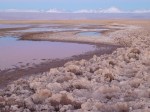
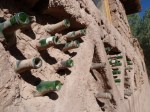
Crusty old salt – literally! – on the edge of the lagoon
The waters from the lagoons flow underground from the snowy Andes Mountains. The waters filter through salt underground.
The war between the two countries this time is not about political differences or control of mineral-rich territories. This one is a war of words about food – and at its core national pride – that emerged and has grown nasty in the past week. And it’s Chile this time around that is coming out on the losing end, one might say taking heat and trying to get out of the kitchen – fast!
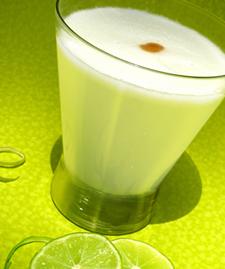
The fight started with a promotional video released by Chile to showcase Chilean dishes and food products to a Russian market. With neighbor Peru known worldwide as a gastronomic powerhouse, Chile has been trying to step out of the shadow and improve its culinary image. In the video, titled “Flavors of Chile,” Chilean chef Christopher Carpentier prepares several dishes with ingredients he touts as Chilean. One of the dishes known as La Causa – The Cause – and a cocktail known worldwide as the Pisco Sour, are presented in the video. Never once in the video does Carpentier say the dish and cocktail originated in Chile, but the fact they are presented in a video labeled “Flavors of Chile” sets off Peruvians, who have a longstanding beef with Chile for taking Peruvian – and Bolivian – land and occupying the two countries following the War of the Pacific. In that war, with Peru and Bolivia allied, Chile won and took copper and other mineral-rich territories. Peru lost whole cities and Bolivia lost several cities, too, including its access to the Pacific Ocean. Since that war fought in the 1800s and subsequent Chilean occupation, Peru and Chile have had cold diplomatic relations. Chileans recognize that many Peruvians don’t like Chileans, and it all goes back centuries. So when Peruvians see anything that smacks of something being taken from them by Chile, they get defensive.
Peruvians – with Peruvian chefs and food experts leading the charge via social and mainstream media – immediately accused Chile of trying to steal yet another thing from Peru, this time their longstanding traditional Peruvian dish and Pisco cocktail.
A sour note
Peruvians are indignant that Chile would promote to the rest of the world the drink and the dish as Chilean when in fact both were originated in Peru. The demand that Chile pull the video came almost instantly, and the Peruvian media wasted no time going out on the streets to ask people what they thought of Chile’s latest foible.
For the record, there is no dispute that the dish – made from mashed potatoes and garnished with seafood or other toppings – originated in Peru. There is debate, however, as to the origins of the Pisco sour. Peru maintains the cocktail was created in Peru, which has a port town named Pisco. Tour guides in Lima, Peru, will point out the place – Morris’ Bar – where the Pisco sour was supposedly invented.
Chileans – with Carpentier going before television cameras – shot back across the border that the video was showing a “fusion” of foods and flavors in Chile, not necessarily touting the dishes as purely or originally Chilean. Carpentier issued an apology of sorts, stating he wasn’t out to mislead anyone. But for the Peruvians, it wasn’t enough. Some still went after the Chilean chef with fervor and gusto. One of those Peruvians leading on that front in the cross-border food fight was none other than restaurateur and Peruvian cuisine expert Isabela Alvarez.
Alvarez went to the media to share a bit of inside knowledge about Carpentier. She said some three years ago he came to her for work. She offered him an internship in her restaurant, El Señorío de Sulco, where Carpentier, she says, learned the ins and outs of Peruvian cuisine. She said he became fascinated with Peruvian cooking and especially fond of La Causa.
“He knew the origin of these dishes, which he learned to do in our country,” she told the Peruvian press, adding that it was not by ignorance or accident that he had prepared the dishes for the video. She then went on to rip Carpentier apart, calling him “irresponsible.”
Meanwhile, the president of the Peruvian Society of Gastronomy, Mariano Valderrama, threw himself in the middle of the fight. He said La Causa is undeniably Peruvian and of that there can be no argument because the dish is strongly linked to the cause of Peru’s national independence. He told Peruvian press that however “it was gratifying to know that the Chilean chefs take our plates and help us to spread throughout the world.”
Valderrama explained that the name of the dish comes from a Quechua word and that the dish was prepared to sell and raise funds for the patriots who sought to liberate Peru from Spain.
In the video Carpentier also takes a stab at preparing ceviche, which is a dish found in many Latin American countries, but a dish nevertheless for which Peru gets high marks as the country that knows how to make a killer ceviche.
Valderrama told the Peruvian media that although ceviche is prepared in many countries, especially those located to the Pacific, in Peru it’s a tradition and done well.
Peruvian press has not let up – perhaps out to further embarrass Chile – by doing man on the streets interviews on the subject – stirring the pot.
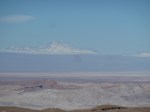
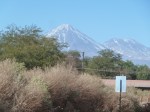
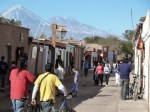
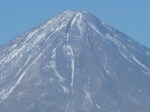
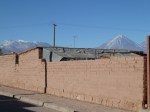
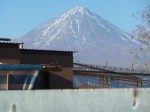
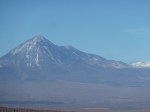
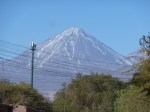
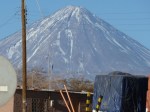
Licancabur Volcano viewed from San Pedro de Atacama, Chile. The volcano is located in Bolivia and Chile. Click image for more information
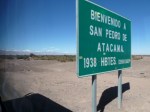
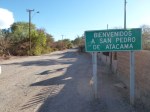
And so I am now in San Pedro de Atacama, the tiny village in the middle of the desert that draws thousands of tourists seeking natural fun and adventure.
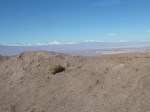
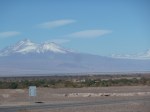
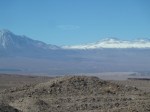
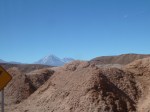
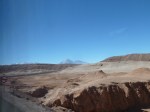
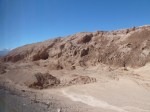
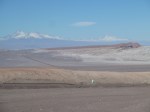
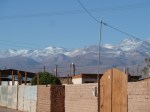
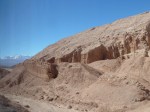
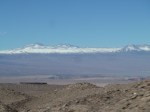
The Atacama Desert in Chile‘s northern region is a landscape like no other. As I made the one-hour bus ride from Calama to San Pedro de Atacama I wondered why is it that this vast land is not deemed one of the world’s natural wonders. Have you ever seen or heard of a place on Earth where in the middle of the desert there is actually snow? Boggles the mind.
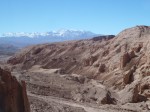
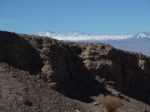
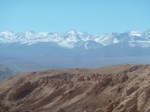
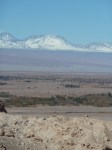
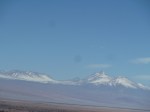
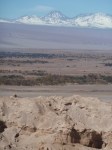
The Andes Mountain range runs fairly uninterrupted through the Atacama Desert, and where there are tall mountain peaks there’s usually snow. The landscape is a study in contrasts. My eyes focused on the snow-blanketed mountains but my mind kept saying, wait a minute, you are in an arid zone, a vast wasteland straight out of Mad Max’s Thunderdome. And yet, there’s the snow, lots of it, cascading down to the desert sand. Man, I’m definitely heading up one of those mountains to shift from hot sand to cool snow in one day’s climb. Hot to cold and back to hot. Well, more like warm. It is winter in the desert and while the days are comfortably warm, the nights are chilly.
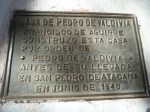
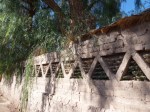
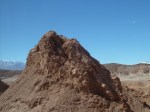
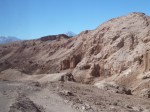
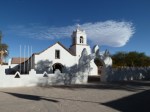
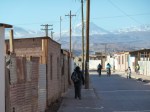
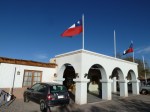
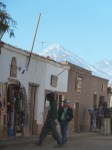
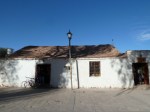
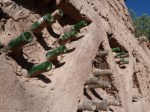
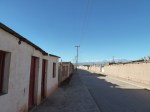
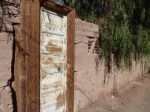
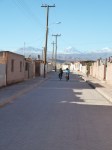
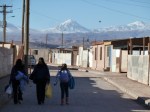
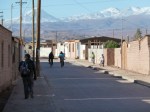
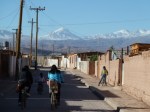
As for San Pedro de Atacama, it isn’t at all what I expected: homes and other buildings are built from adobe – a mixture of clay, sand, straw and water – and roads left unpaved – in other words, rocky dirt words that I’m sure turn to mud – if it ever rains. The Atacama is the driest place on Earth.
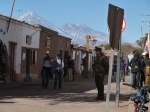
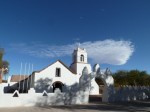
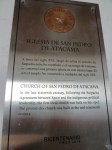
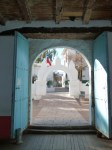
The village, with homes that date back to the 1500s, seems to have been built to cater to tourists. It has rows upon rows of hostels and hotels and businesses that offer guided tours to see the mountains, the desert, the geysers, lakes, lagoons and salt flats. Tour guides abound. There are also the usual shops – countless of them – selling local arts and crafts. In short order, San Pedro de Atacama is crawling with tourists who outnumber actual residents, just below 2,000 people. The tourists are here for obvious reasons. The town is the launch pad for all the natural beauty – the flora and fauna – that the surrojunding area offers. But beyond that, San Pedro de Atacama is a fantastic little town that has remained largely unchanged for centuries. It’s well worth a visit.
Now if they could only do something about the wind kicking up all that sand. Bring sunglasses to keep some of that sand out of your eyes. And expect to be dusted in that fine desert sand.
























































































 Mike Tends To Travel
Blah blah blah (Comments)