Posts Tagged With: Calama Chile

A Fractured Arm Leads To Bolivian Obsession

The first time I saw the Salar de Uyuni, I was sitting in the waiting room of my doctor’s office, with a fractured right arm. I was 16-years-old, tall and skinny with a big afro – I looked like a pencil with a big eraser. Wouldn’t have taken much to snap a bone in my stick-figure body, and indeed it didn’t take much effort when my childhood friend Dickey pulled my arm right out of the socket at the elbow.

We were walking home from school and we spotted a cigarette lighter on the ground. It was one of those cheap plastic ones that come in a variety of bright transparent colors. With its transparency, the fuel inside was visible. This particular lighter was orange and judging from the amount of fuel, it was brand new.

Deep in conversation, Dickey and I walked along Flatbush Avenue in Brooklyn, New York, toward home. The conversation came to an abrupt end when we spotted the lighter. Our reaction? He looked at me, I looked at him and without a word, we both made a mad dash for the lighter.

Dickey was not as fleet-footed as me. He was beefy bordering on fat, but he could move fast when pushed. On this particular day, he wasn’t as fast as I was. I got to the lighter about a second ahead of him and snatched it up, scraping my knuckles against the concrete pavement – ouch! He only managed to grabbed my fist clutching the cigarette lighter. He tried to pry my fist open to grab the lighter, which was sticking out a bit. Had I had it solidly in hand, maybe he would have backed off. Instead, he continued to pry the lighter out of my hand, but I did not budge. Our struggle for the lighter became a full on wrestling match in the middle of Flatbush Avenue – and you would think some adult would intervene? – people instead just walked by as if nothing.
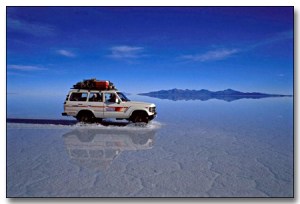
Summer months bring rain to the Salar de Uyuni

Then it happened. Dickey yanked on my extended arm so hard that it popped right out of the socket at the elbow. All I heard was a snap, crackle then a pop! I dropped the lighter in anguish.

I never had experienced such pain. Dickey and I walked the rest of the way home, he with the lighter in his pocket, me clutching my arm. The next day my arm was so swollen at the elbow, my mother took me to the doctor. The doctor at first determined that the arm was not broken. I could still move my fingers. He sent me home with an order to ice it. Then the next day my doctor’s office called to say the X-Ray had revealed a fracture and that I needed to return to see the doctor. That day I left my doctor’s office in a cast that extended from my wrist to my armpit. Nice going Dickey!

Okay, the truth is both Dickey and I were both at fault. We were two dumb teenagers horsing around. And when that happens, sometimes someone gets hurt – boys will be boys, you know. He did feel bad about it. And every chance I got, I reminded him that he owed me big time! He didn’t fall for that. We went on being friends, as if nothing.

In some strange way, I have Dickey to thank. Had it not been for that fractured arm, I never would have landed in the doctor’s office with the Nat Geo subscription. There on the table in the waiting room, there were several month’s worth of Nat Geo magazines. I picked one up and started to thumb through it and there it was – the Salar de Uyuni – or in English – the Uyuni Salt Flats. I thought, where in the world was this place and how could I get there – like soon?! Like most images in Nat Geo, the photographs were absolutely stunning. I then read the text: Bolivia.

Uyuni has since been embedded in my head. This desert where instead of salt the land is an expanse of blindingly white salt – often under inches of water that reflect sky and mountains during the rainy summer seasons – has crept into my dreams. I have long wished to visit Uyuni, and every time I have met someone lucky enough to have visited, I peppered them with questions. And now, living in Calama, Chile, a few hours away from Uyuni, I think my decades-old dream to visit is near. Or so I hope.
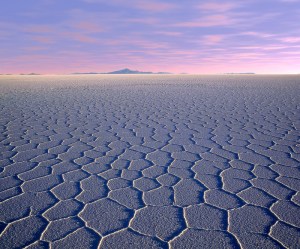
Salar de Uyuni during winter months. Water gone.

I am determined to visit Uyuni, but tit-for-tat global politics may have something else to say about that.

I EXPLAIN: The president of Venezuela, Hugo Chavez, hates the United States. As if to drive that point home, he has aligned himself with avowed enemies of the United States. He has also used Venezuela’s oil riches to influence other countries in the region, one of which is Bolivia.

The president of Bolivia walks in lock-step with the president of Venezuela. When Venezuela is mad at the United States, Morales feels the need to show his loyalty to Chavez by, frankly, doing something stupid. That stupid thing – which amounts to shooting himself in the foot and hurting the Bolivian people – was to make it more difficult for U.S. tourists to visit Bolivia. Morales imposed a $135 visa requirement on U.S. citizens, placed strict limits on how long they could stay in Bolivia, and imposed other rules that work like a charm to turn away Americans. It’s not that Morales wants Americans to stay away – au contraire – he wants Americans to continue to visit and pay a “reciprocal” visa fee, about the same amount that Bolivians are required to pay to gain a visa to enter the U.S.

Only problem with Morales tit-for-tat approach is Bolivia – the poorest country in South America and one of the poorest in the world – needs those millions of tourists dollars it once got from visitors from the United States. There was a time when 1 in 5 visitors to Bolivia was from the United States. Since the new requirements that number has dropped. Some Americans don’t mind paying the fee – frankly, some who are backpackers on a budget can’t afford it – but what makes Bolivia even more a country to be avoided are some of the other roadblocks Morales has put up, aimed at just sticking it to the United States.

As I started researching what is required to enter Bolivia as a U.S. citizen, I literally got a headache. I mean, for instance, must bring a photograph of a certain size with a red background only? If the background of the photo is anything other than red expect to be turned away and sent back across the border or on the next plane. For a country and a people badly in need of tourism dollars, how stupid is that? Politics.

Now, I believe in reciprocity. Brazil, Argentina, Chile and others have such laws in place. These laws state we charge your citizens what you charge our citizens to enter your country. But in some of these countries, Chile for instance, you pay nothing if you cross the border by land. In other words, low-budget backpackers are not hit with a large fee. When I crossed the border from Peru into Chile, I paid nothing.

And some countries only require the fee, not that you jump through hoops, as Bolivia does. Foolish, if you ask me.

So, I must make sure that all my I’s are dotted and my T’s are crossed as I make my way to the Bolivian border in coming weeks. I am taking no chances. I will be marching down to the Bolivian Consulate in Calama, Chile, to inquire exactly what they need from me. Would be a shame to come this far and only come as close to Uyuni as that National Geographic Magazine spread my dear old friend Dickey unwittingly led me to.

ANOTHER BLOGGER ON BOLIVIA’S REQUIREMENT FOR AMERICANS

TTT

Categories: posts, Rants and Raves | Tags: , , , , , , , , , , , , , , , | 2 Comments

No Quitting The Cueca In Oasis Called Quitor

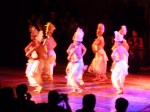
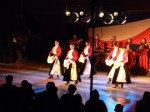
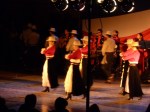
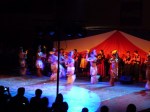
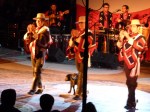
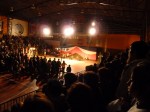
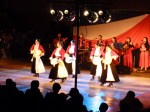
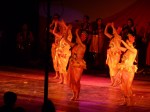
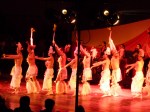
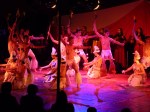
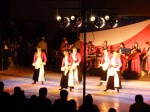
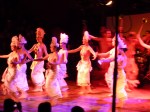
Folkloric Ballet of Chile. Photos, slide show below

What a week last week!

Chile celebrated its Independence Day in grand style, with cookouts, a wide variety of events that involved food, music and dance, and a healthy amount of patriotic flag-waving.

I had been so busy balancing work and enjoying what Chile served up during the celebrations that stretched over a month that little time was left to share with you – in a timely manner – all that I’ve been up to. In a nutshell, unabashed fun – even at work. That’s just how Chileans roll.

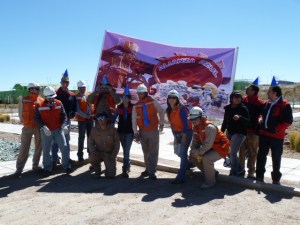
Team Blue at Gaby Mining Company ready for competition

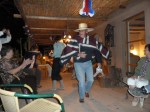
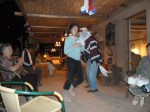
For me, the long Independence Day weekend started  in earnest at the copper mine where I teach English to corporate executives and their support staff. Company employees took to the parking lot for friendly relay races that drew laughter and then to the dining hall to watch and take part in a cueca competition. The cueca is Chile’s typical dance. It consists of some foot-stomping and fancy footwork all while the dance partners wave white handkerchiefs. I started dancing the cueca about two weeks ago and I swear I haven’t stopped. If you come to Chile during Independence Day festivities, you can bet your bottom peso that someone will drag you out on the dance floor to watch you make a fool of yourself. No matter. After a few pisco soursyou won’t give a damn.

Careful laying that egg!

After much diversion at work, that very evening I went home, took a long nap, and headed over to the office for an office party that consisted of a barbecue, Chilean food and the unavoidable shop talk. It was at the office party that I learned that the following evening there would be a free performance of the Folkloric Ballet of Chile. I jumped at the chance to attend this rare cultural treat in Calama. If this dance company ever comes to your town, don’t miss it! The troupe has toured the world with an entertaining repertoire  of traditional and modern dance, highlighting Chilean folk music and dance. I thoroughly enjoyed.

Early the next morning I headed for the bus terminal with two of my housemates – Zack and Chris – where we  met others with whom we would spend the weekend in  Quitor and San Pedro de Atacama, high in the Chilean desert. That was some weekend, spent touring, eating, dancing, swimming and having an amazing time on an estate – an oasis of pleasure and relaxation in the middle of the desert – owned by the aunt of one of my colleagues. About 20 of us ate, sang and danced there all weekend long.

Monday afternoon we headed back to Calama content and a few pounds heavier from all that good eating. I believe the word “diet” was tossed about several times. What a week it was.

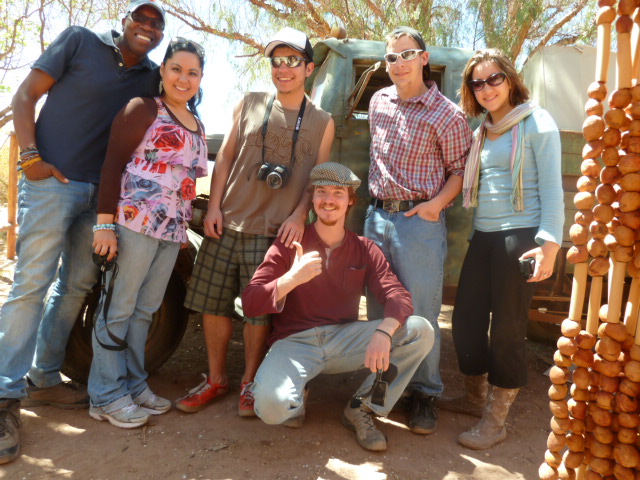
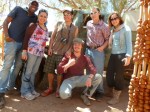
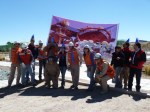
The Deja Vu Wrecking Crew: (left to right) Me; Christina, (New York, USA); Angello, (Calama, Chile); Zack, (Florida, USA); Chris, (Saint Jacobs, Canada); and Maureen (Chicago, USA), all English teachers at the International Center in Chile

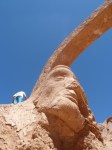
Stone mermaid in Quitor, Chile, on estate where weekend was spent

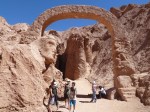
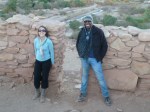
Pre-Inca site in Quitor, Chile. What a find!

This slideshow requires JavaScript.

Categories: posts | Tags: , , , , , , , , , , , , , , , , , , , | Leave a comment

Every Protest Should Rise To This Level Of Fun

"What Would Chile Be Without Calama?"

I have to hand it to Chileans. Well, at least the Chileans in the northern town of Calama. They know how to make anti-government protest and random acts of civil disobedience entertaining. I’ve never had so much fun at a demonstration.

Not that I’ve participated in many protests to know the dynamics, the mechanics and what is to be expected. I have to think back to my college years to recall a demonstration I took part in. It was against a proposal to replace the free-wheeling, free-choice Liberal Artsprogram with a mandatory core set of academic subjects. So instead of entering college and choosing which subjects you wanted to take toward your major, a freshman would be required to take a series of  courses in math, science, English and a sprinkling of other subjects before he or she could fully concentrate on subjects in whatever major he or she had settled on.

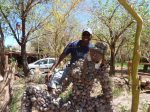
Masked Man

Minority students saw that as a backdoor strategic move to scrap ethnic studies, such as Black Studies and Puerto Rican studies. Demonstrations decades before had led to the establishment of those departments and students weren’t about to let them go without a fight. I still remember the chant of hundreds of students in front of the administration building: “Core curriculum we say no! Ethnic studies won’t go!!” We lost that battle. All the college administration had to do is wait. Soon, the vocal opponents would have graduated and moved on to real life issues, such as jobs, marriage, kids, a mortgage.

After college I was not allowed to participate in protests or even so much as sign a petition no matter how worthy the cause. I was a journalist and journalists give up certain rights and freedoms other citizens have. Journalists have opinions, certainly, but they must keep them in check if they want to keep their jobs. Of course, journalists who are paid to give their opinion, well that’s a different story.

So this protest thing was sort of foreign to me. As a reporter I had covered my share of demonstrations, but they ranged from peaceful gatherings to the odd guy in a monkey suit chained to a bike rack in front of a federal courthouse.

Music and protest

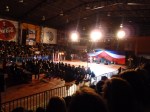
In Calama, it was all about music. This protest to force the central government in Santiago to give Calama 5 percent of the revenues generated by the copper mines in the region was more like a folk and rock concert than anything else. In between pronouncements and denouncements of the administration of President Sebastián Piñera, bands took the stage and rocked the crowd. The headliners, the Chilean band Sol y Lluvia, had the flag-waving, mostly young audience jumping up and down in unison and singing along. Sol y Lluvia formed in the 1980s and became popular for their brand of music that mixes modern and traditional instruments, but also because of their strong opposition to the dictatorship of General Augusto Pinochet. I really enjoyed this band. And so did the rest of the audience on hand.

Besides the bands, there were cheerleaders doing acrobatic stunts, men and women in strange costumes, jugglers on stilts, flag dancers, loud vuvuzelas left over from World Cup Soccer, and an assortment of other acts that pleased the audience. This was the most excitement I had seen in Calama in the nearly two months I’ve been here.

Freed mayor speaks

Now, I refer to the amassed crowd as an audience rather than protesters because the event evolved into a street festival. Sure, there were some tense moments, but few and far between. At Chuquicamata, the largest open-pit mine in the world, Calama Mayor Esteban Velásquez and several others were arrested and put in jail for several hours after they blocked the entrance to the mine to stop vehicles from entering and exiting in a failed effort to shutdown mining operations. According to eyewitnesses, several of the demonstrators who showed up at the mine around 4 a.m., were forcibly removed by riot police brought in from the town of Iquique, about five hours drive north. The mayor and the others were freed after boisterous demonstrators turned up at the police station to demand their release. Other demonstrators claimed they and others were beaten by riot police at the mine.

Also at the Calama Shopping Mall, which chose to ignore the citywide work stoppage, demonstrators blocked access and refuse to allow potential shoppers to enter. Mall security and police worked out an agreement with the demonstrators to allow the mall to stay open until noon. The protesters agreed and promptly at noon were back at the mall chanting and turning away people who were trying to do some shopping.

Several demonstrators at the mall tried to get me to join them and I pointed out that I was not Chilean and the penalty for foreigners participating in demonstrations in Chileis automatic deportation. The women said they would protest my deportation. Funny.


This slideshow requires JavaScript.

Sol y Lluvia

Categories: posts, Rants and Raves | Tags: , , , , , , , , , , | Leave a comment

Blog at WordPress.com.