Posts Tagged With: Andes

Riding, Slipping And Sliding Down An Andean Volcano

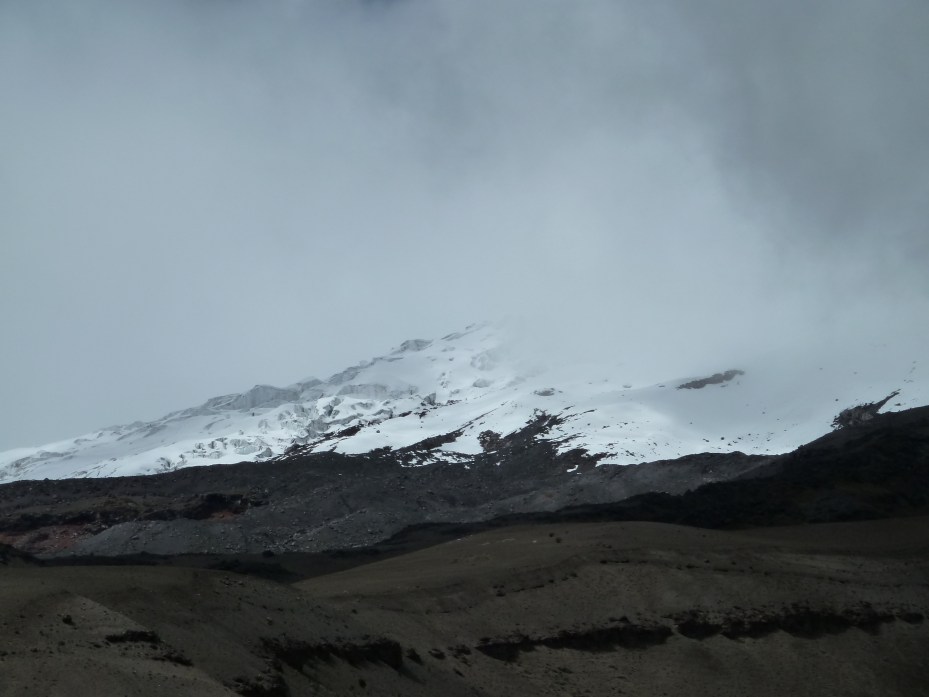
The very chilled Cotopaxi volcano

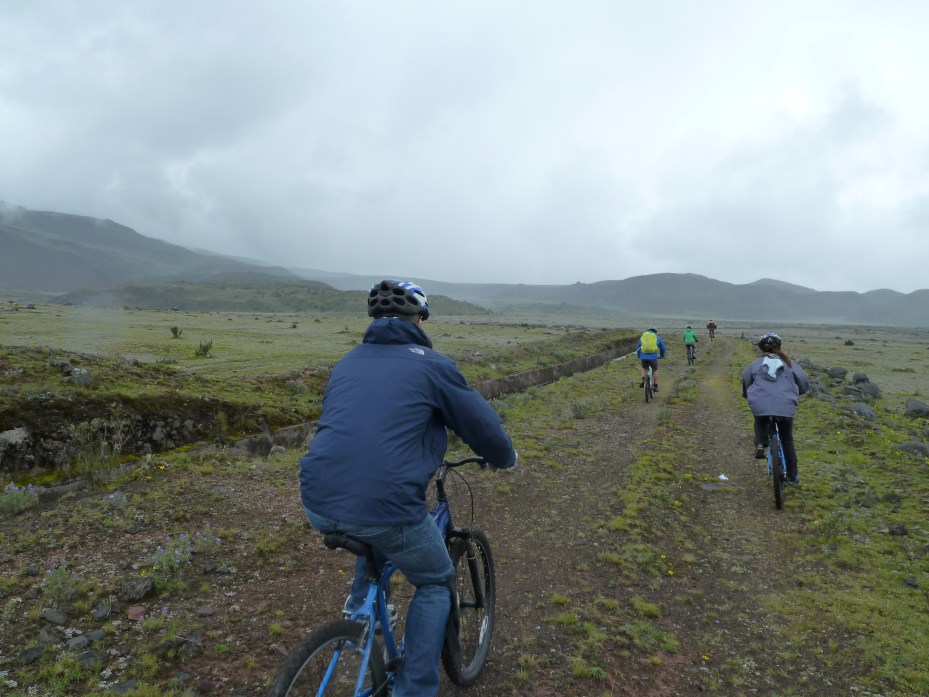
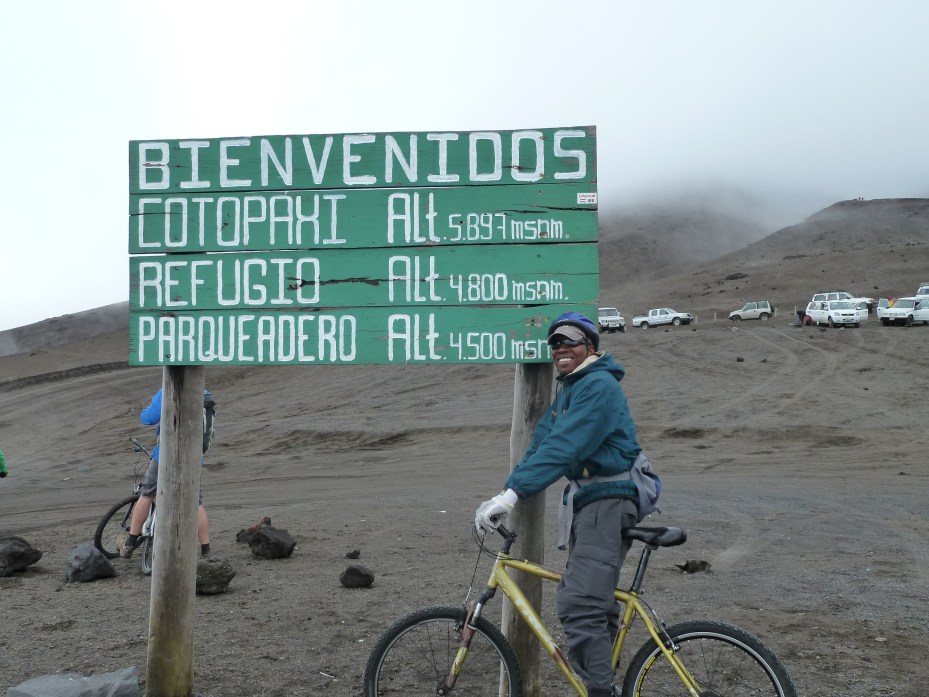
I took one last glance at the peak of the 19,347-foot snowcapped volcano, wrapped my gloved hands around the handlebar of the gold Trek mountain bicycle, placed both feet on the pedals, and flying down the peak’s jagged slopes I went, taking the first curve extremely fast, the rear wheel sliding to the right and then to the left as I pumped the brakes to slow down. Not a smooth start to this bike ride down Cotopaxi, Ecuador’s highest active volcano and second highest peak.

Thats me, coming round the mountain

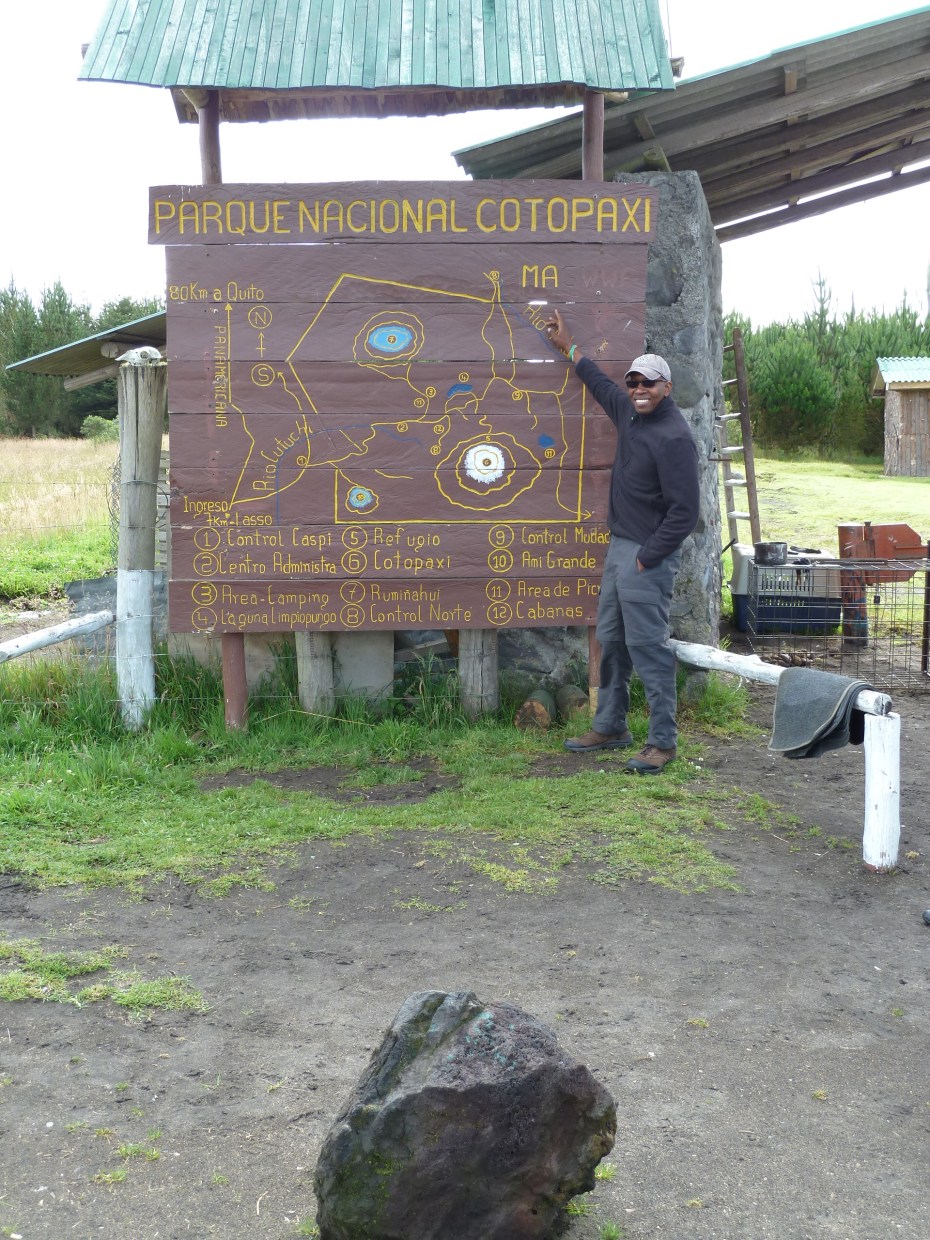
I managed to stop the bike without falling. It wasn’t a pretty stop, but it was stop. There at that curve that came so suddenly and so soon, I listened to Diego, our guide on this bike tour of this beautiful and yet potentially deadly mountain that has logged more than 50 eruptions over centuries. Quito, Ecuador‘s capital, could face a major disaster if Cotopaxi were to explode. Similarly, other towns in the valley near the volcano could be wiped out by mudflows. Cotopaxi, scientists predict, will one day blow its top to disastrous consequences. But none of the people who see the volcano every day ever really think about that. What they think of is its beauty, it’s place among peaks in the Andes mountain range, and they appreciate Cotopaxi for what it is – a natural wonder.

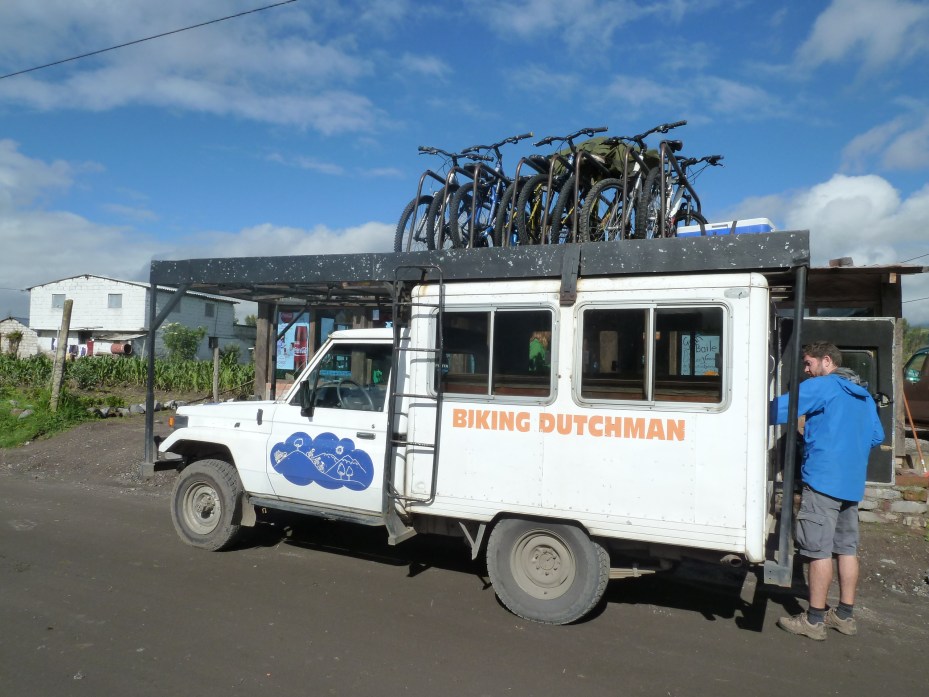
Diego, a tall and lanky Ecuadorian, leads these bike tours of Cotopaxi and other peaks in the Andes several times a week. He works for a tour company named The Biking Dutchman. The company’s owner is dutch.
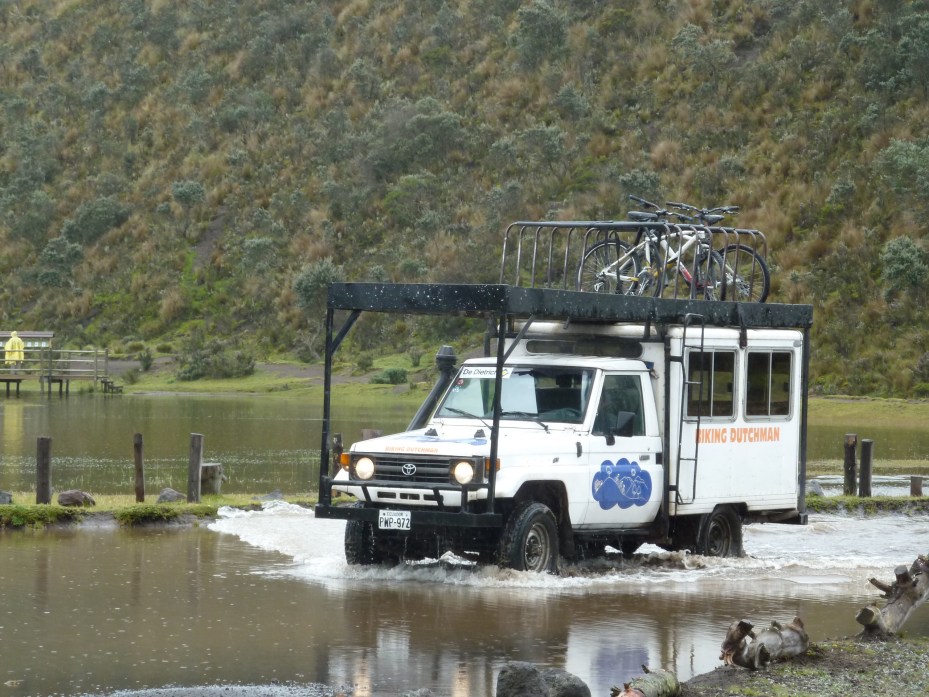
The Bike Beast - Crossing the waters of a swollen mountain lake

I don’t know where Diego gets the strength to ride these peaks as a job. It’s not exactly office work. It’s extremely physical and even dangerous: rain-soaked and bumpy dirt roads and uneven paths covered with volcanic ash, loose gravel, protruding rocks, rain-filled potholes, cars, trucks and wild horses – yes, wild horses – on the road, and those sharp curves, all make for a great challenge. Miscalculate and you just might wipe out – or be wiped out. But what is adventure with no risks?

At that first hard curve Diego stopped to point out the terrain, below the peak, a valley formed millions of years ago by Cotopaxi’s eruptions. He said maybe we would be able to see the wild horses that roam the valley. Spanish conquistadors brought horses here and these wild horses are of that lineage of horses left behind by the Spaniards. Indeed we saw several of those horses further down the mountain, trotting across the roadway, as we sped on our bikes toward them. On this trek, not counting Diego and a driver, there were five of us: a couple from Canada and another couple from Scotland that now lives in London. We were all going to test our mettle on this trip down the mountain, which involved some challenging climbs, especially given the thin mountain air.
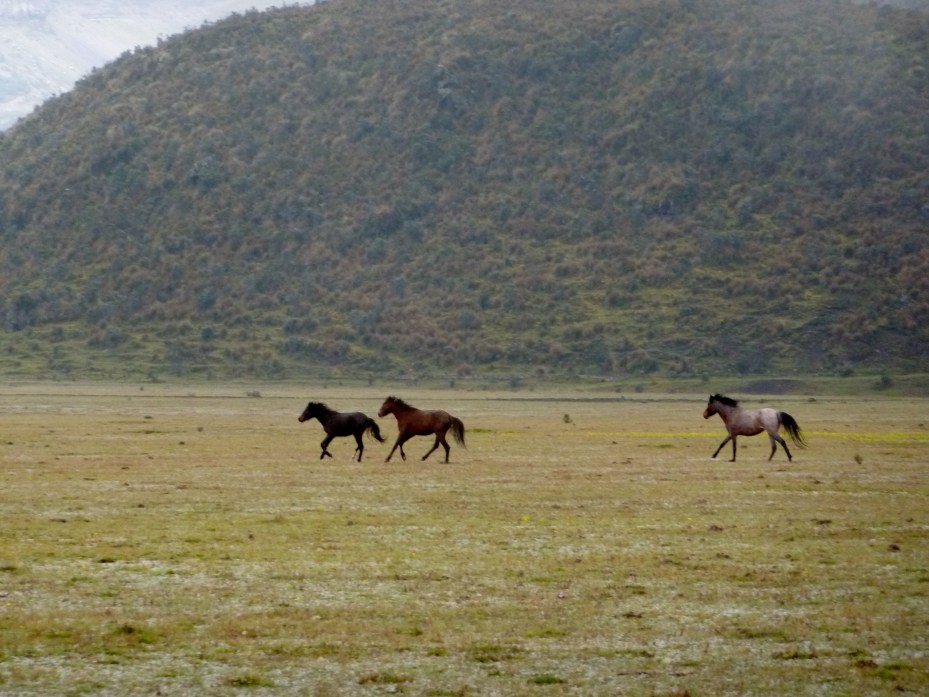
Wild horses run across the valley at the foot of Cotopaxi

We started this tour at 7 a.m., meeting up at the Magic Bean hostel and cafe. After I loaded up on coffee and a cream cheese bagel, we hopped in the Biking Dutchman four-wheeler that would take us more than 14,000 feet up the mountain. From there, we would ride down, mostly down a steep and curvy road, but as I earlier said, there were a few uphill battles which some of us – myself included – lost: we walked our bikes. On one of these walks up the climb, here goes Diego pedaling along: “Hey Michael! This is the last one, it’s all down from here, come on, join me!” Yeah, superman. I’m right with you. 🙂
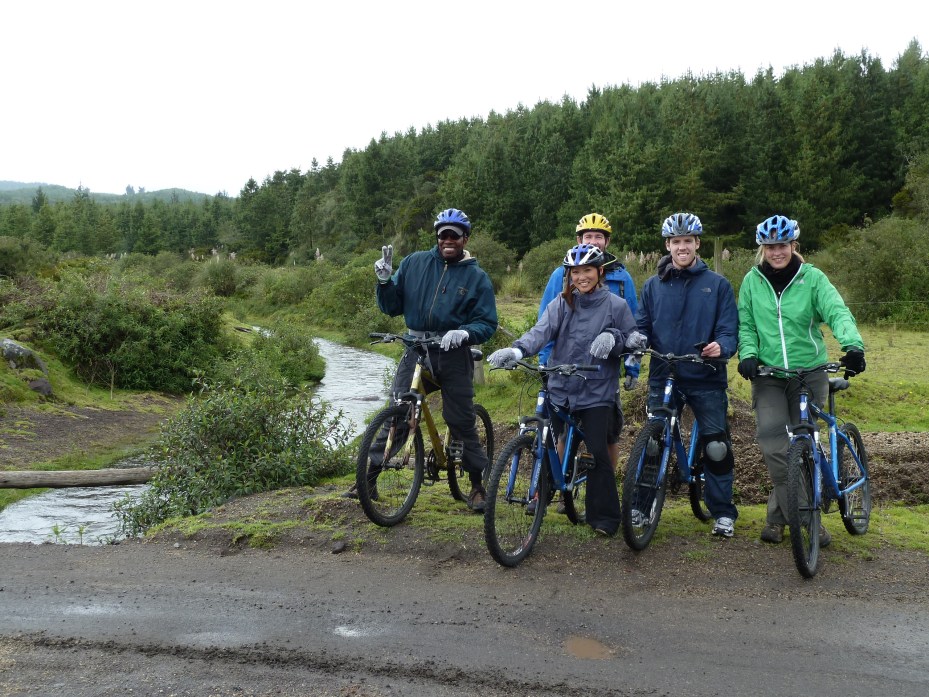
We made it!

On the way down, I was going so fast it was as if I was flying. At this point it was raining and my face was being pelted by the rain, dirt and gravel that somehow mysteriously was airborne. Churned up by cars and riders ahead of me, perhaps?

After a few minutes on the bike I had shed any fear and relish the speed down the volcano. I had done plenty of road cycling, but not much mountain biking, so there was somewhat of a learning curve (hahaaha, no pun intended 🙂 I figured out when to grip the handlebar tighter and when to loosen my grip; when to raise my butt off the seat and stand on the pedals; when to brake and when to simply just let go. I must have hit speeds of up to 40 mph (conservative estimate) going down the mountain’s slopes and even on some of the curves, feeling the bike slip and slide, but always trying to stay in control. That’s key, maintaining control even if you are going fast. Also extremely crucial, losing all fear. If you are afraid, you will get hurt. If you are too cautious, you will have no fun, and then what was the point of going up the mountain? You may as well have stayed in the city, sipping a mocha.

This kid was too funny!

So down and round and down and round I go, fast, all I hear is the buzz of the wind at my ears, wet, cold and warm all at once. I unzip my jacket to cool off then I’m too cold. Zip it back up, one hand on the handlebar – steady! The rain has clouded and the cold have clouded my Oakleys – my sporty sunglasses – which I then question why am I even wearing them, there’s no sun. I continue on, flying down the mountain, then come to a canal. I stop to take a photo. Here comes Diego: “Michael, you passed the first stop! You have to go back up. It’s a little bit of a climb.” Yeah, superman. A little big of a climb my…. I just came flying down that hill. That’s a nice climb.

Earlier, on the way up the volcano, Diego had pointed out a spot where we all should stop and meet. The idea was for all of us to ride at our pace, fast or slow, but that we should meet at the specified location to continue on the second part of the trek, which turned out to be a dirt path that circled back to the very canal where I had stopped. Nevertheless, I peddled up and up and up and up and up until I reached my fellow mountain bikers. They were waiting for me. The couple from Scotland said they were calling out my name, trying to get me to stop when they noticed I had gone beyond the meet up spot. I heard nothing but the wind.  For that, I got an extra helping of climbing.

Making coca tea, which helps altitude sickness, many swear

We broke for lunch around a warm chimney fire inside a store and coffee shop lower on the mountain. Pasta, some sort of spinach Quiche, ginger tea and brownies were provided. It was there I had my first drink of coca tea. They say it helps altitude sickness, but not that I was having any of that, I just wanted to try coca tea. Two indigenous women prepared it – it cost $1. To me coca tea tastes simply as an herbal tea. And no, I did not get high from it. The coca leaf is just a plant. Cocaine is a derivative of that plant. But it’s quite a bit of steps to get from the plain natural coca plant to manmade cocaine. After my tea, we suited up and down the mountain we continued, the handlebar feeling more like a jackhammer set on high.

I made it all the way down from more than 14,000 feet, without injury and exhilarated. It was a great tour. And great to be on the mountain. Now I’m sore – your body does take a pounding – but it’s a good sore.  Now, on to my next adventure.
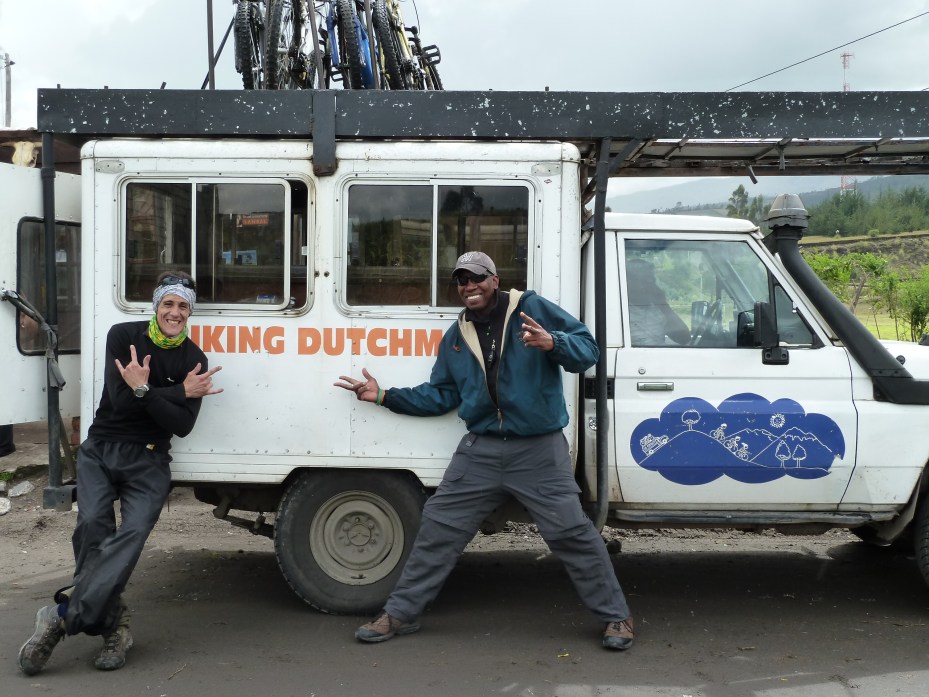
Con "El Man Superman" Diego, after the journey

MORE PHOTOS OF THE COTOPAXI PEDAL


Categories: posts | Tags: , , , , , , , , , , , , , , | 3 Comments

Cali To Quito: The Earth Moved

Oh, the rush of sitting in a bus stuck on a dark mountain road, being pelted by a torrent of rain, when suddenly part of the mountain comes crashing down, mud sliding beneath the idle bus, rocks and boulders bouncing around you like beach balls. The sound alone of the mountainside sliding down in the darkness is enough to make start wondering what will you do to escape being pushed over the edge of the cliff by the force of the moving earth or being buried alive. I and some 30 others was a sitting duck on this road trip to the border town of Ipiales, Colombia, and the mountain was shooting at us. When it rains this heavily, walls do tumble and fall. I’ve seen the aftermath of mudslides and hillsides giving away. In Colombia, the land is scarred with such after effects. I just never imagined I’d ever witness such a horrific force of nature, let alone be standing in its path. Before family and friends get to worrying, we escaped harm, with a truck ahead of us taking the brunt of of nature’s beating. But what a night it was.

I left Cali, Colombia, Friday evening. I was excited to see Quito, Ecuador, my destination on this leg of my journey. I’ve been to the Northern Hemisphere. I’ve been in the Southern Hemisphere. How cool would it be to stand at the Equator, the exact middle of Earth?

The bus left late – nothing unusual there – and it began to rain when we left Cali. Nothing unusual there, either. It is rainy season in Colombia, and it has been raining quite a bit. Before I arrived in February, I saw news reports of floods, of houses being washed away or falling off hillsides because of landslides. It seemed no part of the country was immune from the torrential rains. Not even the Tatacoa Desert near Neiva, which was unusually green in some parts because it got heavy amounts of rain.

So I came to Colombia during the rainy season, but I knew on this journey I would hit bad weather somewhere.

The road from Popayan to Pasto twists as it climbs and snakes even more at higher elevations between Pasto and Ipiales. I’m not sure which stretch of road we were on when we hit stalled traffic, but I overheard the bus driver tell an inquisitive passenger that this stretch of road scares him. He then shared a story about boulders the size of buses have rolled off the mountain and that landslides were fairly common. He didn’t have to remind anybody of that; road signs did that, but there was evidence of earlier rock falls.

I woke up when I felt the bus come to a complete stop. I was seated in the first row with a clear view out the large windshield. There was a truck in front of us, it’s orange warning lights flashing in the dark. Ahead of it, more vehicles, all standing still, their engines off. The only sound I heard was the rain pelting the bus and the thunder that followed lightning. It was eerie, so surreal, so scary for anyone out here alone.

The bus driver put a plastic shopping bag on his head, retried a flashlight and head out into the rain. He disappeared into the darkness as he headed up ahead to investigate what was the hold up. He returned, soaked, and told the passenger who asked that rocks, mostly small ones but a couple of large ones, were blocking the road. He said some truck drivers were trying to remove them. He added that there was no emergency work crews or police in these parts at this hour. It was shortly after 3 a.m. Luckily we still had communication, as the driver got on his cell phone to report the situation. And so we waited.

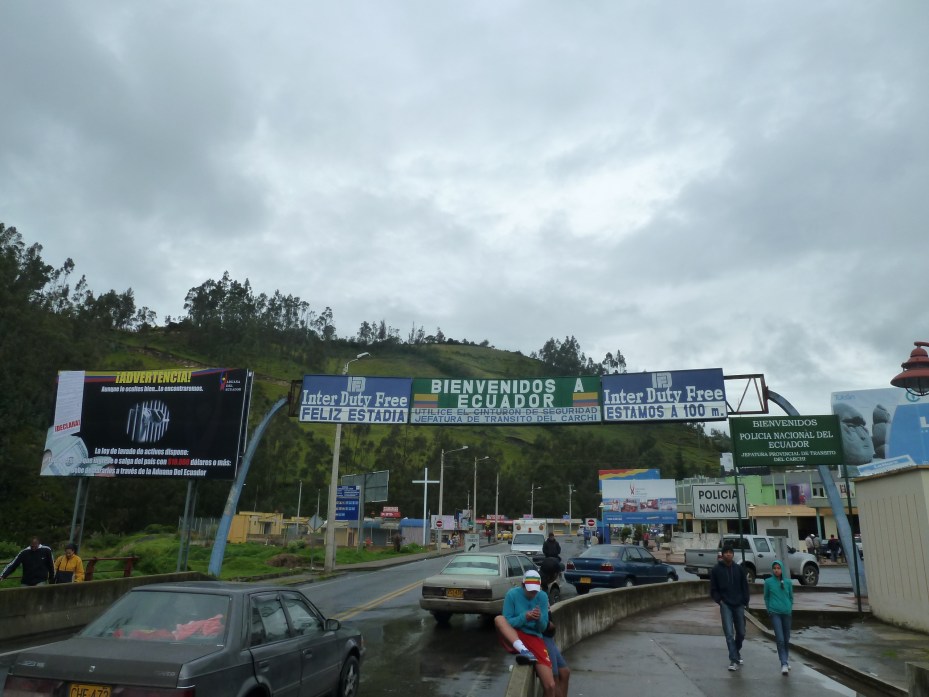
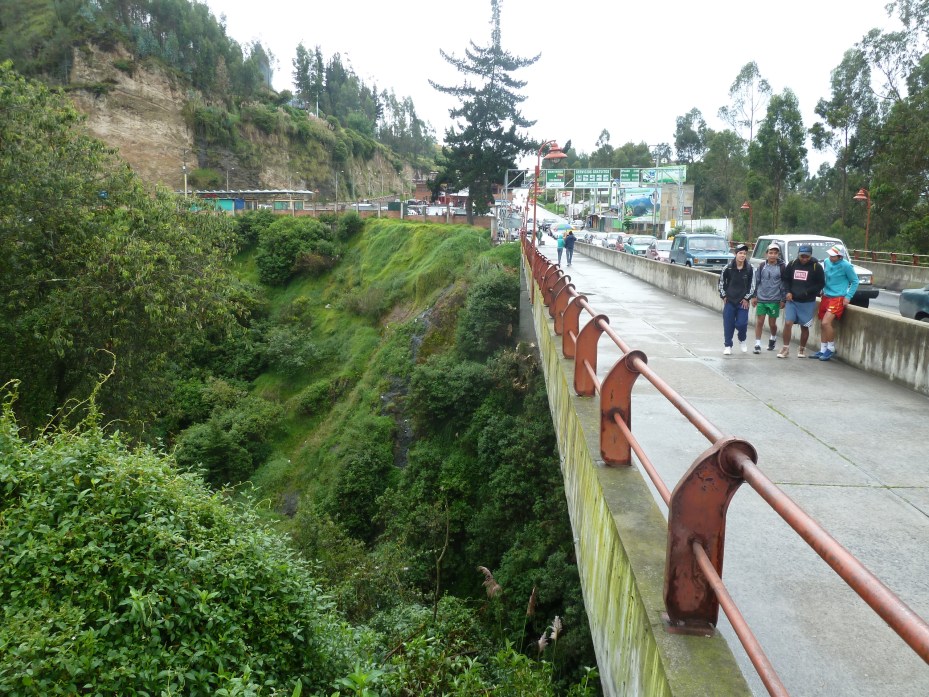
This bridge between Colombia and Ecuador is all it really takes to go from one country to the next. Hardly any border control, basically left to the traveler to stop and get proper passport stamps

Then came that sound. It was a sound of something cracking. And before anyone could react to ask what it was, we knew what it was. Watery mud slid under the bus. And rocks fell, bouncing off the road, some breaking into pieces, others rolling between us and the truck ahead. The bus driver turned on the engine and a woman on the bus seated behind me freaked out. Those who were sleeping through this pause in the trip, awoke wondering aloud what was happening. The driver said we had to get out of this zone. But we couldn’t move. Cars and trucks stranded in both directions. The driver started to honk the horn, as if to send a signal that it was no longer safe to wait. “Vamonos!” he let out. “Let’s go!”

Then, as if by some miracle, I saw the headlights of an oncoming truck. Traffic in the opposite direction began to flow. The truck drivers were successful in opening the road ahead, if only partially. When it was our turn to go, the bus had to squeeze by some pretty hefty boulders partially blocking the road, and drive over rocks. We spent a good 10 to 20 miles performing this maneuver, sometimes coming close to the edge of the road and the mountainside or cliff, to get around the fallen rocks. Didn’t get much sleep on the bus that night.

When we reached Ipiales, sleepless, tired passengers emerged. A man approached and tried to sell me breakfast as I got my backpack. I declined. I had survived the trip on water and Oreo (with double stuff, of course) cookies. I needed a bathroom. I needed a bath.

I made my way to the bathroom – 600 pesos a woman at the door demanded – and I splash water on my face and felt like crap. I needed more sleep. But I had to push on. From Ipiales, I would need to take a minivan – they call them colectivos – to Rumichaca, the Colombi-Ecuador border post. About a 10 minute drive. Once I cleared customs on both sides of the border, another colectivo to the center of Tulcan, a border town in Ecuador. From there, I’d have to find the next bus out to Quito. Simple, right?

On both sides of the border you are accosted by dozens of men holding stacks of dollars – the money exchangers – aggressively asking if you want to exchange your Colombian pesos for U.S. dollars. If you don’t already know this, in Ecuador the national currency is the U.S. dollar. Facing a serious currency and financial crisis, Ecuador dumped its currency more than 10 years ago – the sucre – and adopted the dollar as its official currency.

So these money exchangers literally surround you, and of course you need to exchange money. Supposedly, you get a better rate in Colombia than in Ecuador. Some merchants on the Ecuador side of the border- including the colectivos – will accept Colombian pesos, but their preference is for the U.S. dollar. Others say you can keep your pesos, thank you.

For those thinking about crossing the Colombia-Ecuador border, let me say this loudly and clearly: EVERY PERSON EXCHANGING MONEY ON THE BORDER IS OUT TO CHEAT YOU.  THERE IS NOT A SAINT AMONG THEM. That’s how they make their living. They don’t charge an exchange fee, so how else do you think they turn a profit?

These men are more often than not successful in taking your money, with some fast finger work on a calculator. They are like magicians. So here I go again with the caps: BRING YOUR OWN CALCULATOR TO THE BORDER AND USE IT! Your calculator will produce a more favorable return on your exchange than their calculator. Trust me on this.

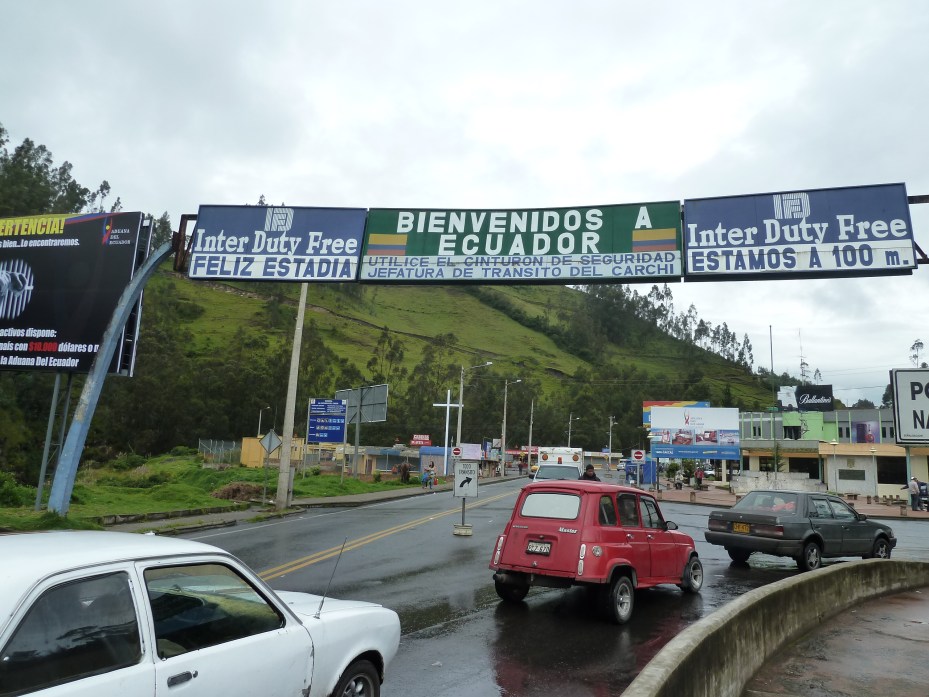
Leaving Colombia, a different world awaits on the other side

The guy I chose to convert my pesos into dollars pulled out his calculator and told me the rate he was offering. It was 1,990 pesos = 1 dollar – which to me sounded like a very good rate. So I said okay. But when he input the amount of money I wanted to exchange divided by the 1,990 rate, his calculator showed $325, the amount in dollars I would be getting for my pesos. Since I had read about these kinds of trickery at the border (thank you Google), waited until he did his computing before I produced my own calculator. I would beat him at his own game: He gives me what sounds like an excellent rate, does the math on his calculator, then shows it to me. If I were to show him I had a calculator before he started his shenanigans, he would likely offer a lower rate or maybe just walk away to steal from some other sucker.

So I reached into my pocket and pulled out my iPod Touch, which has a calculator. After I did the math on my calculator, the amount came out almost $100 higher. The man, as his two partners in crime talked nonsense as a diversion and distraction tactic – “hey, where you from?” “that’s a really cool shirt” “You’re gonna love Ecuador, you should check out…” – was clearly disappointed that I had a calculator and did my own math. He was busted. He gave me the higher amount I had come up with plus an extra dollar because I owed him a dollar in the exchange and I did not have change. So in the end, he ended up the loser – by a dollar – on the deal. No sweat, he said, and moved on to rip off someone else.

At the border I met some other foreign travelers and told them what happened. They had all exchanged money, too. Concerned, they asked me to do their exchange on my calculator. Every single one of them had been cheated out of anywhere from $10 to hundreds of dollars. What could they do? They were already on the Ecuador side of the border. You have to be smart about your money, and you might think a calculator doesn’t lie, well in the hands of crooks and thieves it does.

I made my way on foot across the bridge that spans the border between Colombia and Ecuador and went directly to customs. I got in line but it was not moving, and growing longer instead. The customs office doors were also locked, though there were customs agents inside. Soon word came that the computer system had crashed and they had been working for at least two hours to fix it. Then as hundreds of people waited patiently in line, a stampede toward a nearby copy center was set off by a customs agent who announced the system was still down and to move ahead with the processing we’d have to provide a copy of our passport. People dashed off to the copy center and started a line there. But patience waned when customs again created confusion by telling people inside the office only those who were seated would be attended, so everybody should take a seat and they would be called by row in the order they were seated. Some people at the end of the line managed to snag seats in front. Not fair, a woman screamed. Others openly protested, screaming at the customs agent who threatened to have then tossed back across the border.

After some more impatient pushing and shoving that erupted outside, misinformation by Ecuador customs agents, rushing about and forming other lines to make requested copies of my passport, I was officially allowed into Ecuador 5 hours later, a process that would normally take minutes.

One bright spot: on the van to the Tulcan bus station, where there are buses to Quito, a man who looked to be at least 80 years old and could barely walk without his cane, serenaded us on the bus with his guitar and a beautiful folk song. He had a raspy voice, and coughed a bit between the lyrics, but the music was soothing – a pleasant way to enter Ecuador after the customs debacle. By the way, when you’re hanging around a border crossing for any length of time you meet the most interesting people. I spent most of my time there with a trio of travelers – a guy from Bolivia, his French girlfriend and their Argentine friend. They were traveling across South America, broke – no money – and working odd jobs here and there to keep traveling. They joked they only had 80 cents among them and that would likely only get them to the next town. I gave them some Oreo cookies. They told me lots of funny stories about their travels. They were penniless, but happy.

Just a walk across the border

On the bus to Quito I tried to get some sleep but the bus made frequent local stops and at every stop vendors entered trying to sell everything from food to pirated movies, some more aggressive with their sales pitch than others. One woman placed a bag of marshmallows on my lap as I was seeking music on my iPod. She said I didn’t have to buy, that I could at least have a look.

And so went to journey from Cali to Quito. But I must say during daylight, the landscape to Quito is very scenic, with breathtaking mountains, deep canyons and rushing rapids. Then, a break through the clouds – the Andes!

Quito, you may be cold and wet and dreary and way up in the clouds, much like Bogota, but you are all panoramic splendor and natural wonder. And now I am at the center of the world, glad to be here and ready to explore.

Categories: posts | Tags: , , , , , , , , , , , , , , , , , , , | 3 Comments

Blog at WordPress.com.