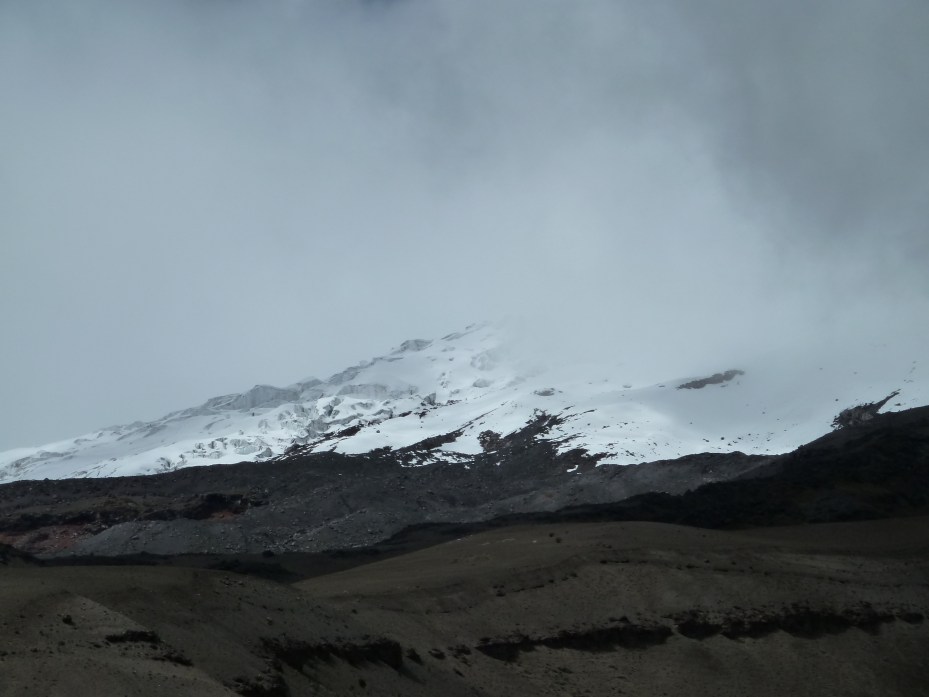
The very chilled Cotopaxi volcano
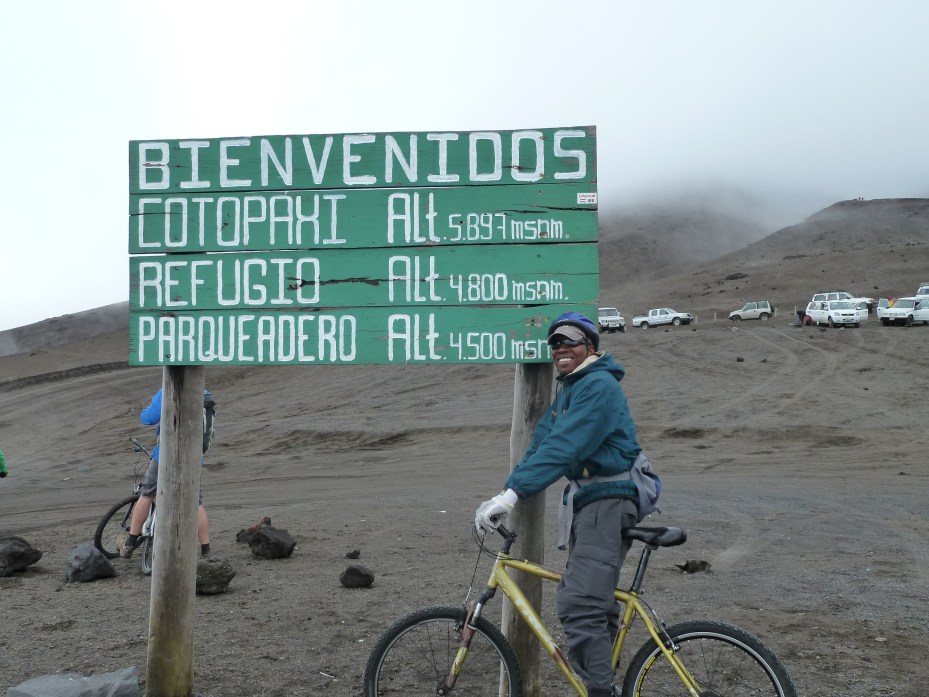
I took one last glance at the peak of the 19,347-foot snowcapped volcano, wrapped my gloved hands around the handlebar of the gold Trek mountain bicycle, placed both feet on the pedals, and flying down the peak’s jagged slopes I went, taking the first curve extremely fast, the rear wheel sliding to the right and then to the left as I pumped the brakes to slow down. Not a smooth start to this bike ride down Cotopaxi, Ecuador’s highest active volcano and second highest peak.

Thats me, coming round the mountain
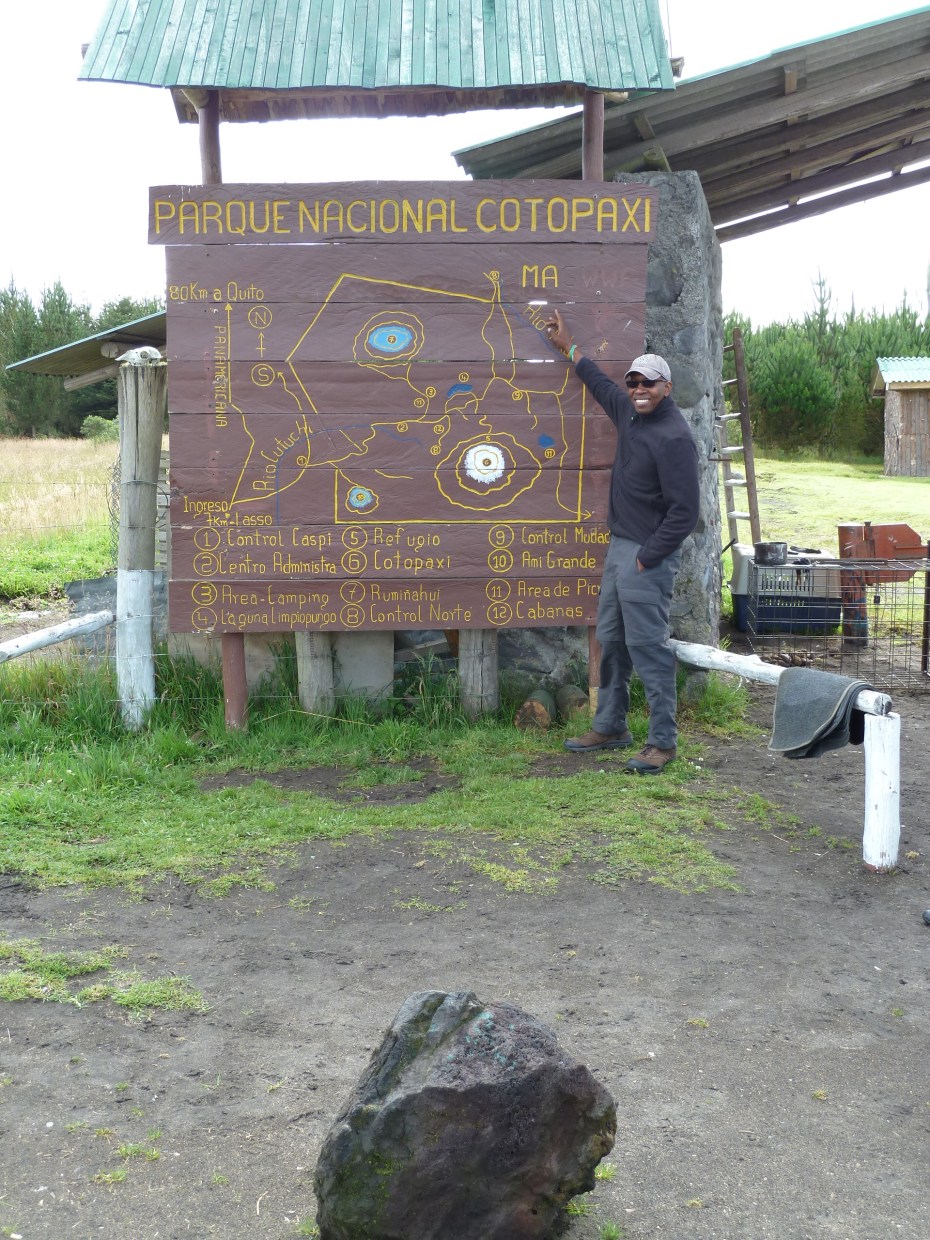
I managed to stop the bike without falling. It wasn’t a pretty stop, but it was stop. There at that curve that came so suddenly and so soon, I listened to Diego, our guide on this bike tour of this beautiful and yet potentially deadly mountain that has logged more than 50 eruptions over centuries. Quito, Ecuador‘s capital, could face a major disaster if Cotopaxi were to explode. Similarly, other towns in the valley near the volcano could be wiped out by mudflows. Cotopaxi, scientists predict, will one day blow its top to disastrous consequences. But none of the people who see the volcano every day ever really think about that. What they think of is its beauty, it’s place among peaks in the Andes mountain range, and they appreciate Cotopaxi for what it is – a natural wonder.
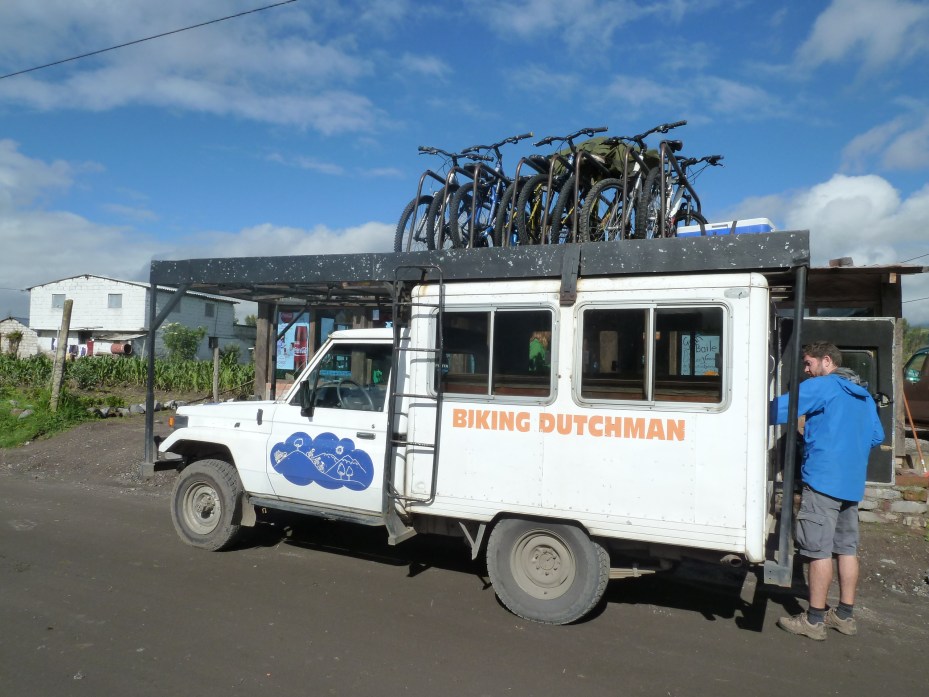
Diego, a tall and lanky Ecuadorian, leads these bike tours of Cotopaxi and other peaks in the Andes several times a week. He works for a tour company named The Biking Dutchman. The company’s owner is dutch.
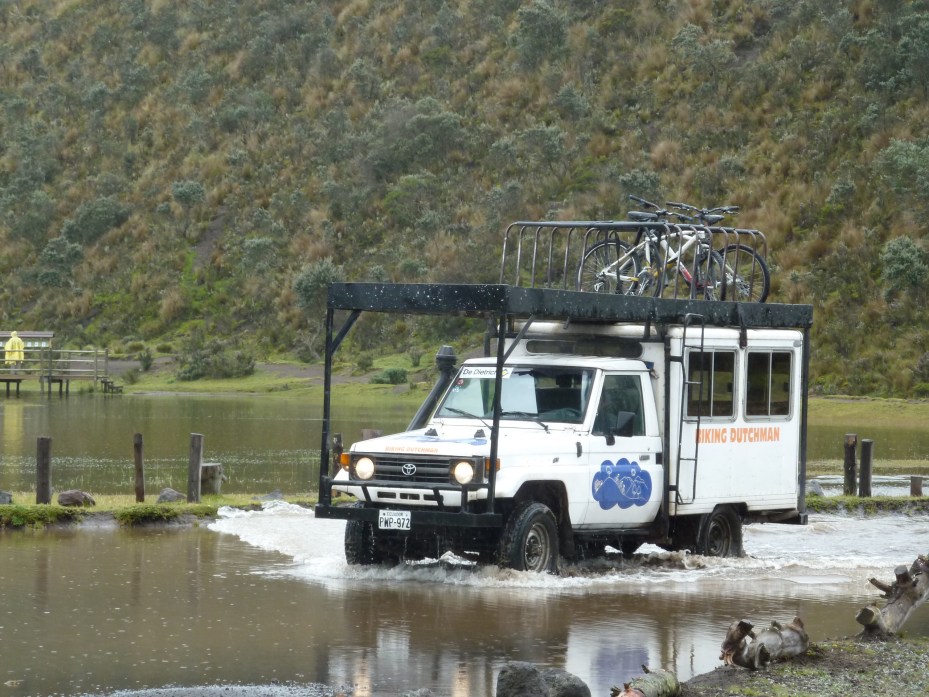
The Bike Beast - Crossing the waters of a swollen mountain lake
I don’t know where Diego gets the strength to ride these peaks as a job. It’s not exactly office work. It’s extremely physical and even dangerous: rain-soaked and bumpy dirt roads and uneven paths covered with volcanic ash, loose gravel, protruding rocks, rain-filled potholes, cars, trucks and wild horses – yes, wild horses – on the road, and those sharp curves, all make for a great challenge. Miscalculate and you just might wipe out – or be wiped out. But what is adventure with no risks?
At that first hard curve Diego stopped to point out the terrain, below the peak, a valley formed millions of years ago by Cotopaxi’s eruptions. He said maybe we would be able to see the wild horses that roam the valley. Spanish conquistadors brought horses here and these wild horses are of that lineage of horses left behind by the Spaniards. Indeed we saw several of those horses further down the mountain, trotting across the roadway, as we sped on our bikes toward them. On this trek, not counting Diego and a driver, there were five of us: a couple from Canada and another couple from Scotland that now lives in London. We were all going to test our mettle on this trip down the mountain, which involved some challenging climbs, especially given the thin mountain air.
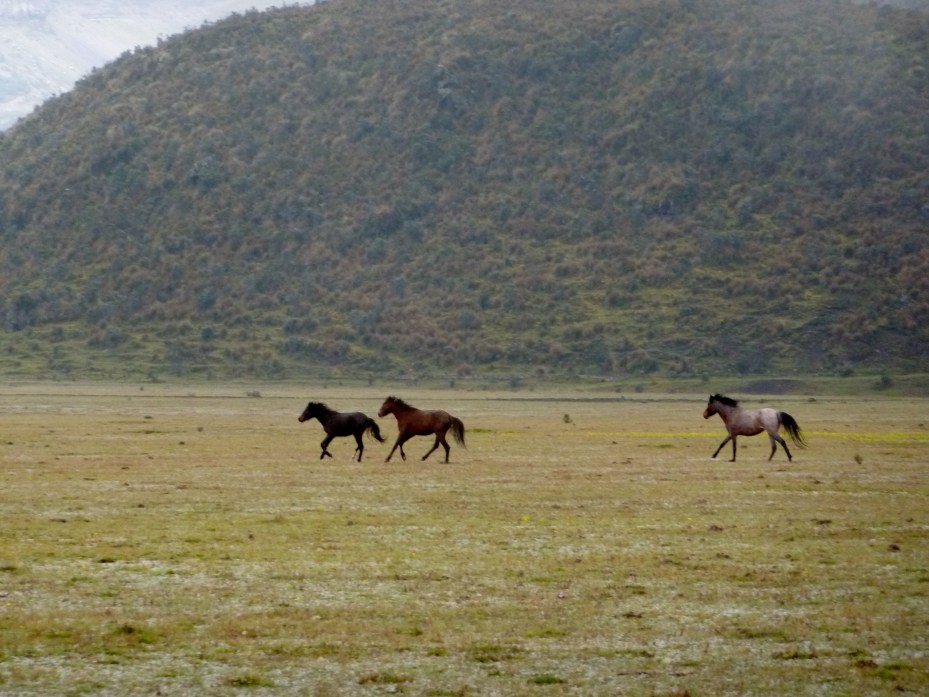
Wild horses run across the valley at the foot of Cotopaxi
We started this tour at 7 a.m., meeting up at the Magic Bean hostel and cafe. After I loaded up on coffee and a cream cheese bagel, we hopped in the Biking Dutchman four-wheeler that would take us more than 14,000 feet up the mountain. From there, we would ride down, mostly down a steep and curvy road, but as I earlier said, there were a few uphill battles which some of us – myself included – lost: we walked our bikes. On one of these walks up the climb, here goes Diego pedaling along: “Hey Michael! This is the last one, it’s all down from here, come on, join me!” Yeah, superman. I’m right with you. 🙂
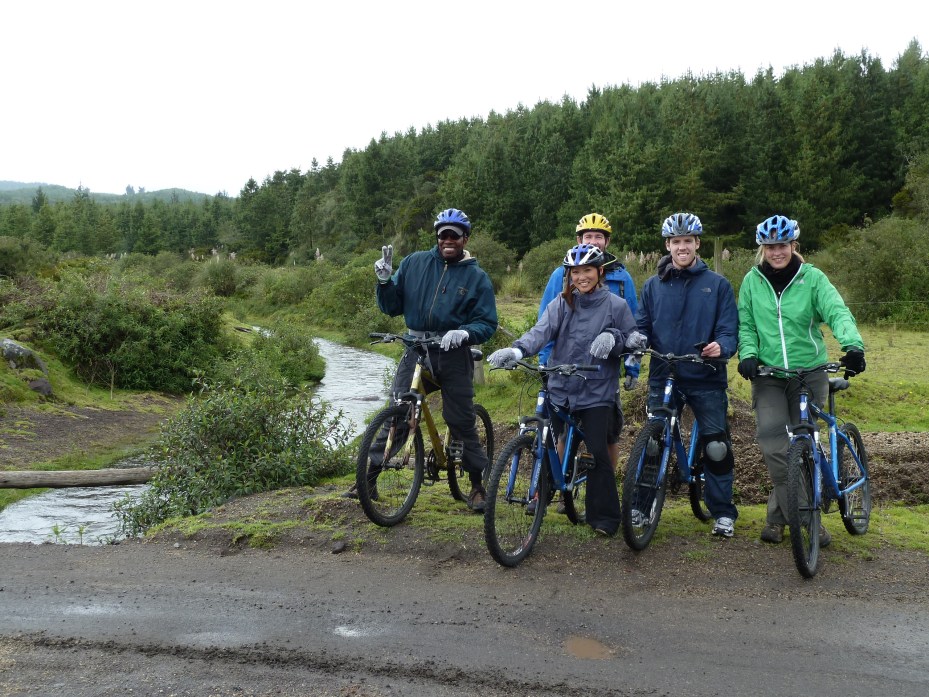
We made it!
On the way down, I was going so fast it was as if I was flying. At this point it was raining and my face was being pelted by the rain, dirt and gravel that somehow mysteriously was airborne. Churned up by cars and riders ahead of me, perhaps?
After a few minutes on the bike I had shed any fear and relish the speed down the volcano. I had done plenty of road cycling, but not much mountain biking, so there was somewhat of a learning curve (hahaaha, no pun intended 🙂 I figured out when to grip the handlebar tighter and when to loosen my grip; when to raise my butt off the seat and stand on the pedals; when to brake and when to simply just let go. I must have hit speeds of up to 40 mph (conservative estimate) going down the mountain’s slopes and even on some of the curves, feeling the bike slip and slide, but always trying to stay in control. That’s key, maintaining control even if you are going fast. Also extremely crucial, losing all fear. If you are afraid, you will get hurt. If you are too cautious, you will have no fun, and then what was the point of going up the mountain? You may as well have stayed in the city, sipping a mocha.

This kid was too funny!
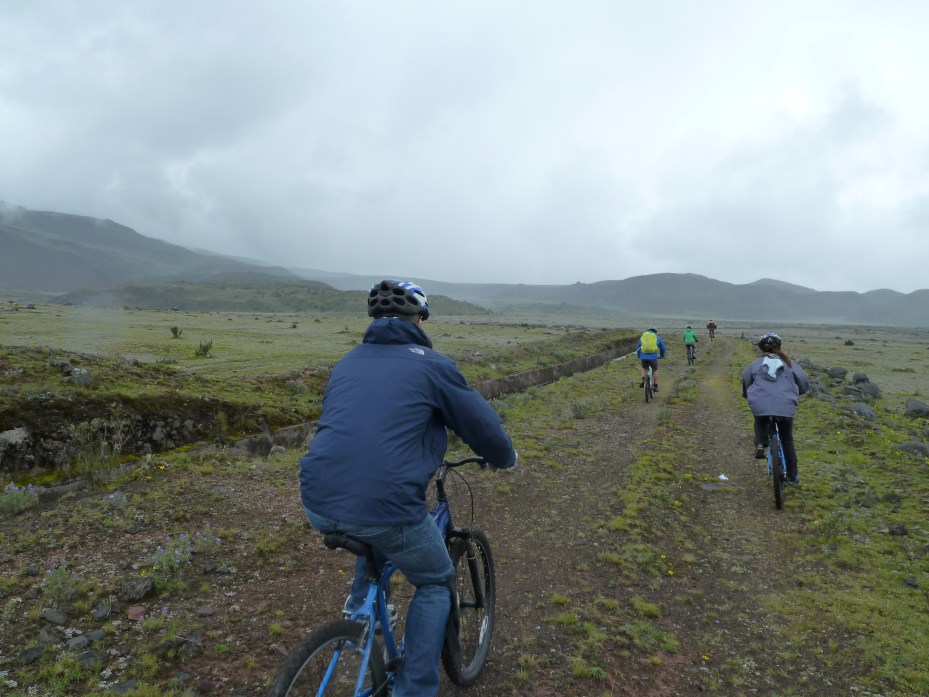
So down and round and down and round I go, fast, all I hear is the buzz of the wind at my ears, wet, cold and warm all at once. I unzip my jacket to cool off then I’m too cold. Zip it back up, one hand on the handlebar – steady! The rain has clouded and the cold have clouded my Oakleys – my sporty sunglasses – which I then question why am I even wearing them, there’s no sun. I continue on, flying down the mountain, then come to a canal. I stop to take a photo. Here comes Diego: “Michael, you passed the first stop! You have to go back up. It’s a little bit of a climb.” Yeah, superman. A little big of a climb my…. I just came flying down that hill. That’s a nice climb.
Earlier, on the way up the volcano, Diego had pointed out a spot where we all should stop and meet. The idea was for all of us to ride at our pace, fast or slow, but that we should meet at the specified location to continue on the second part of the trek, which turned out to be a dirt path that circled back to the very canal where I had stopped. Nevertheless, I peddled up and up and up and up and up until I reached my fellow mountain bikers. They were waiting for me. The couple from Scotland said they were calling out my name, trying to get me to stop when they noticed I had gone beyond the meet up spot. I heard nothing but the wind. For that, I got an extra helping of climbing.

Making coca tea, which helps altitude sickness, many swear
We broke for lunch around a warm chimney fire inside a store and coffee shop lower on the mountain. Pasta, some sort of spinach Quiche, ginger tea and brownies were provided. It was there I had my first drink of coca tea. They say it helps altitude sickness, but not that I was having any of that, I just wanted to try coca tea. Two indigenous women prepared it – it cost $1. To me coca tea tastes simply as an herbal tea. And no, I did not get high from it. The coca leaf is just a plant. Cocaine is a derivative of that plant. But it’s quite a bit of steps to get from the plain natural coca plant to manmade cocaine. After my tea, we suited up and down the mountain we continued, the handlebar feeling more like a jackhammer set on high.
I made it all the way down from more than 14,000 feet, without injury and exhilarated. It was a great tour. And great to be on the mountain. Now I’m sore – your body does take a pounding – but it’s a good sore. Now, on to my next adventure.
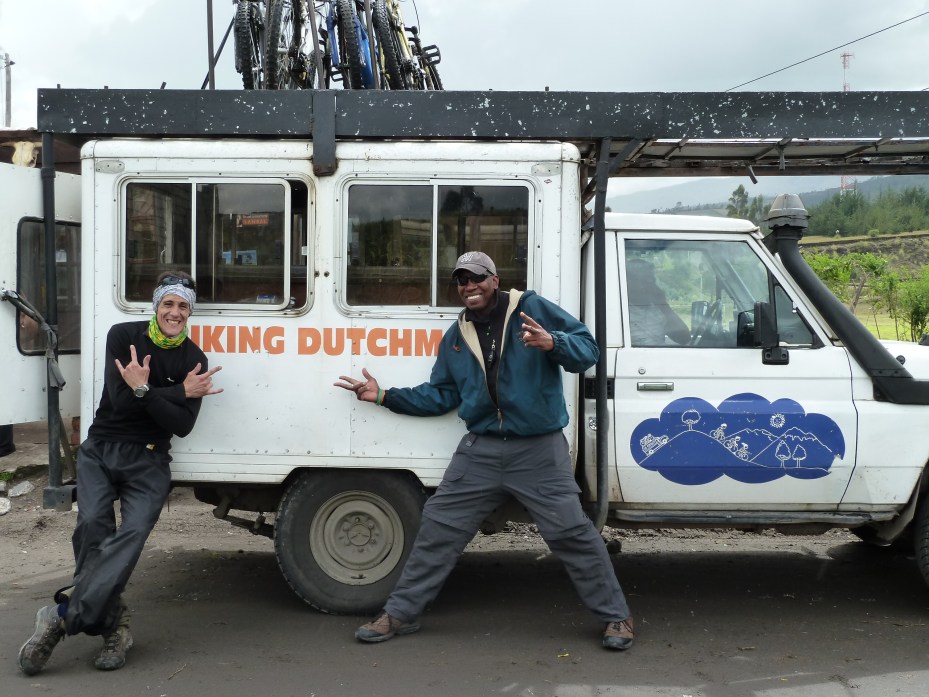
Con "El Man Superman" Diego, after the journey
MORE PHOTOS OF THE COTOPAXI PEDAL




0.000000
0.000000


 Mike Tends To Travel
Blah blah blah (Comments)